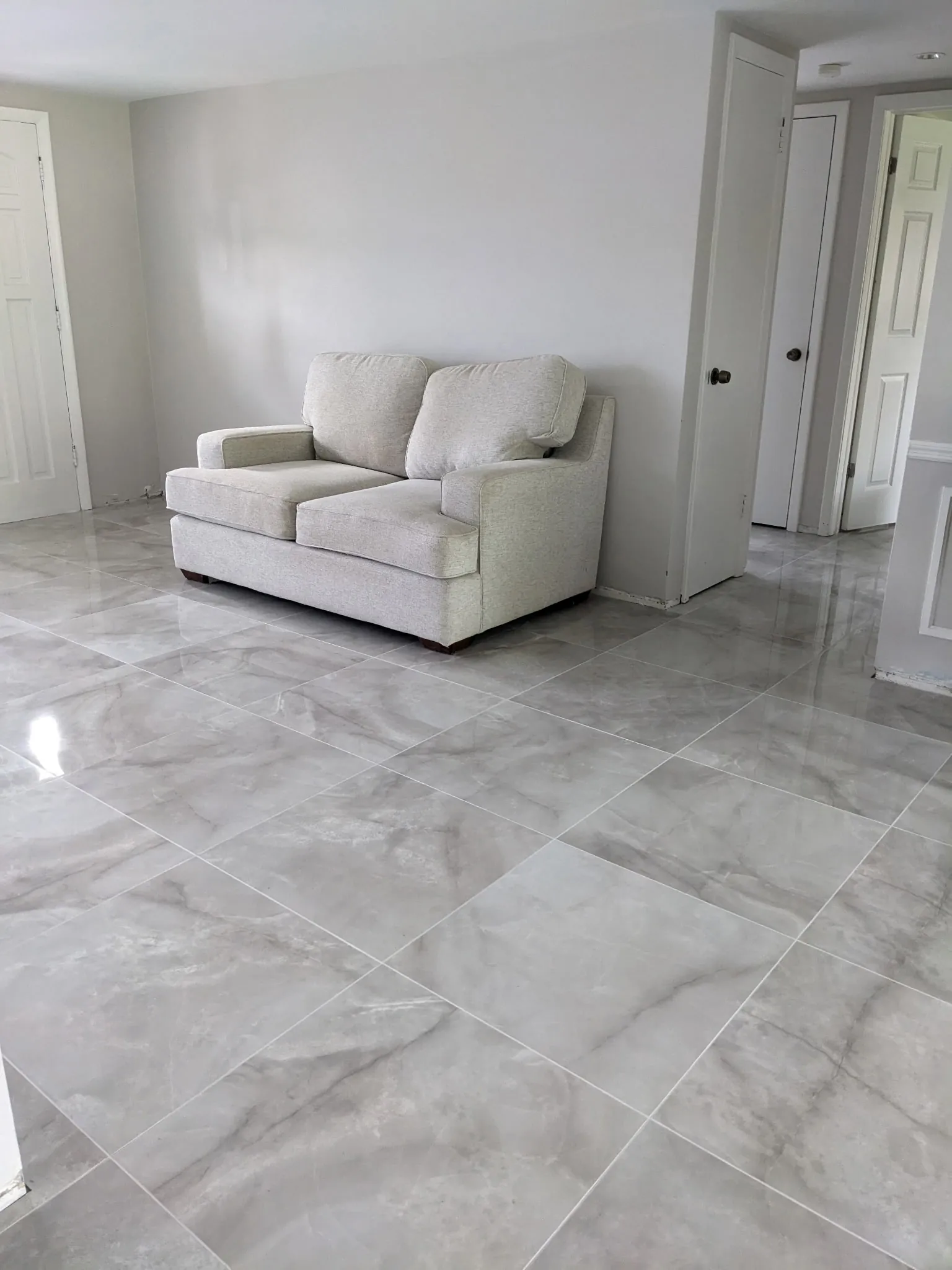
Porcelain and ceramic tile are among the most practical flooring choices for Florida homes — waterproof, scratch-resistant, and comfortable in a climate where humidity and heat are constants. They're also genuinely low-maintenance compared to hardwood or carpet.
But low-maintenance isn't no-maintenance. The most common tile problems we hear about from homeowners — grout discoloration, dull or hazy surfaces, mildew in bathrooms — are almost always the result of the same handful of avoidable mistakes. Here's what actually works, and what to stop doing.
Porcelain vs. Ceramic: Does It Change How You Clean?
A little, yes. Both are clay-based and kiln-fired, but porcelain is fired at higher temperatures, which makes it denser and less porous. Glazed ceramic has a glass-like surface coating that's non-porous; unglazed ceramic is more porous and needs more attention.
Glazed Porcelain
The most common tile in Florida homes and the easiest to maintain. The glaze creates a sealed, non-porous surface. Routine sweeping and mopping with a pH-neutral cleaner is all it needs. No sealing required on the tile face — but seal the grout.
Unglazed / Through-Body Porcelain
The color and texture run through the entire tile, which makes chips less visible — but the surface is slightly more porous than glazed porcelain. Benefits from a penetrating sealer, especially in kitchens where cooking oils and stains can work in over time. Seal at installation and re-apply every few years.
Glazed Ceramic
Very similar care profile to glazed porcelain. The glaze is non-porous and easy to clean. Ceramic is softer than porcelain and more susceptible to chipping under heavy impact, but for daily cleaning purposes, treat it the same way. Seal the grout, not the tile.
Stone-Look Porcelain & Large-Format Tile
Stone-look porcelain — which mimics marble, travertine, and slate without any of their maintenance demands — has become one of the most popular tile choices in Tampa Bay homes. Care is the same as any glazed porcelain: pH-neutral cleaner, grout sealing, no harsh chemicals. None of the sealing requirements of real stone. This is one of the reasons we carry stone-look porcelain rather than natural stone.
Routine Cleaning: What Actually Works
Daily and Weekly
Sweep or vacuum before you mop — dragging loose grit across tile with a wet mop is what causes fine scratches over time, especially on polished surfaces. A dry microfiber mop works well for this. Then mop with warm water and a pH-neutral tile cleaner. You don't need much product — a small amount diluted in a bucket of warm water is enough for most floors.
For most glazed porcelain and ceramic floors, plain warm water mopped and dried is genuinely sufficient for routine cleaning between deeper sessions. The key word is dried — letting water air-dry on tile leaves mineral deposits that build up into a hazy film over time, especially in areas with hard water.
Grout Cleaning
Grout is the maintenance item. It's porous (unlike glazed tile), it sits in joints where grime accumulates, and in Florida's humidity it's vulnerable to mildew — particularly in bathrooms and laundry rooms. A stiff-bristled grout brush with a pH-neutral cleaner handles routine buildup. For mildew, a solution of hydrogen peroxide and water applied and left for a few minutes before scrubbing works well without the grout damage that repeated bleach use can cause.
Florida humidity note: Running your bathroom exhaust fan during and for 15–20 minutes after every shower is the most effective single thing you can do to prevent grout mildew. Ventilation matters more than any cleaning product.
Do's and Don'ts
✓ Do
- Sweep or vacuum before mopping to remove grit
- Use a pH-neutral tile cleaner or plain warm water
- Dry the floor after mopping — don't let water air-dry on tile
- Seal grout at installation and every 1–2 years after
- Use felt pads under furniture legs
- Use mats at entry points to catch tracked-in grit and moisture
- Ventilate bathrooms well — fan during and after showers
- Use hydrogen peroxide solution for mildew in grout
✗ Don't
- Use vinegar — it's acidic and degrades grout over time
- Use bleach for regular cleaning — fine occasionally but weakens grout with repeated use
- Use ammonia-based cleaners
- Use wax or oil-based cleaners that leave a film on porcelain
- Use steam mops on tile with older or cracked grout — steam works into micro-cracks
- Use abrasive scrub pads on glazed tile surfaces
- Let standing water sit, especially near grout joints
- Mop without sweeping first
Vinegar is the most common tile-care mistake we hear about. It's marketed as a safe, natural cleaner — but it's acidic enough to etch some tile finishes and will gradually break down grout over months of use. Warm water and a pH-neutral cleaner is a better choice every time.
Grout Sealing: The One Step Worth Doing
The tile itself doesn't need sealing (for glazed porcelain and ceramic). The grout does. Grout is porous — it absorbs spills, moisture, and cleaning products — and unsealed grout stains and mildews far more easily than sealed grout.
Sealing grout is straightforward: clean the grout lines thoroughly first, let them dry completely (allow 24–48 hours in Florida's humidity), apply a penetrating grout sealer with a small brush or applicator bottle, wipe off any excess that gets on the tile face, and let it cure. Re-apply every one to two years depending on traffic and moisture exposure.
A simple test: put a few drops of water on a grout line and wait a few minutes. If the water beads up, the sealer is still working. If it absorbs and darkens the grout, it's time to re-seal.
Dealing with Common Problems
Hazy or Dull Surface
Usually caused by mineral deposits from hard water, residue from cleaning products that weren't fully rinsed, or a wax-based cleaner that was applied. A commercial tile film remover (not an acidic cleaner — look for an alkaline or neutral formulation) will typically clear this. Prevent it going forward by rinsing and drying after mopping.
Grout Discoloration
If it's surface staining, a grout brush and cleaning solution will often restore it. If the grout has absorbed stains deeply over years of use — or if it was never sealed — the practical solution is often grout recoloring with a grout stain pen, or re-grouting the affected areas. This is also a good time to re-seal.
Cracked or Loose Tile
Individual tiles that crack or become loose are usually a subfloor issue — either inadequate preparation at installation, subfloor movement, or a failure in the mortar bond. A cracked tile that moves when you press it needs the subfloor assessed, not just the tile replaced. If you're seeing multiple cracked tiles in a pattern, that's a sign of a larger underlying issue worth having looked at.
Efflorescence (White Mineral Deposits)
White powdery deposits appearing at grout lines or tile edges are efflorescence — mineral salts being carried to the surface by moisture moving through the subfloor. Common in Florida's climate, particularly in bathrooms and on slab-on-grade floors. Commercial efflorescence removers handle surface buildup; persistent efflorescence can indicate a moisture intrusion issue that needs attention at the source.
Outdoor and Pool-Area Tile
Porcelain tile installed in Florida outdoor areas — pool decks, patios, front porches — requires the same basic care as indoor tile but with a few additional considerations. Choose tile rated for outdoor/wet use (a COF rating of 0.60 or higher for wet barefoot areas). Outdoor grout is exposed to more moisture cycling and UV, so re-sealing grout annually is more important than indoors. Pressure washing is fine on most outdoor porcelain — just keep the nozzle moving and avoid directing it directly into grout joints at close range.
Questions About Your Tile Floors?
If you're dealing with a specific problem — grout that won't come clean, cracked tiles, haziness that won't clear — stop by our showroom at 3312 Grand Blvd in Holiday or give us a call. We're happy to take a look and give you a straight answer on what it'll take to fix it.
Contact Our Team Tile Flooring Guide