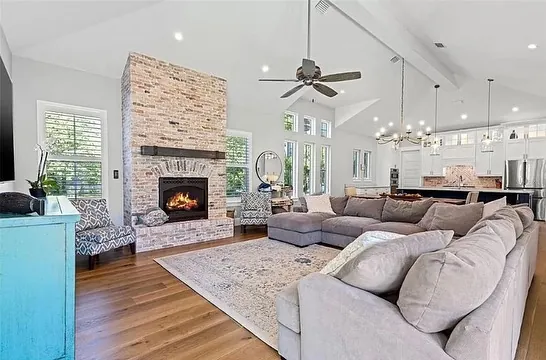
Quick Answer
For most Florida homes, LVP (also called vinyl plank flooring) is the more practical choice — its water-resistant core handles humidity, spills, and temperature swings that cause solid hardwood to cup or gap. Engineered hardwood is the better pick when you want real wood character in a climate-controlled living room, dining room, or primary bedroom. Many Tampa Bay homes use both: LVP in kitchens, bathrooms, and entryways, and engineered hardwood in main living spaces.
If you're shopping for new flooring in the Tampa Bay area, chances are you've been going back and forth between hardwood and luxury vinyl plank — LVP, sometimes just called vinyl plank flooring. They're the two most requested products in our showroom, and for good reason: both look beautiful, both come in an enormous range of styles, and both can genuinely elevate a space.
But they are not interchangeable, and a lot of the comparisons you'll find online are written for a national audience that doesn't have to think about Gulf Coast humidity, summer thunderstorms, or homes that sit warm between air conditioning cycles. This guide is written specifically for Pasco, Pinellas, and Hernando County homeowners — with our honest take after decades of installing both.
What Are They, Exactly?
Hardwood flooring is milled from solid wood or engineered in layers with a real wood veneer on top. It's a natural product — each plank is unique, and the material has a warmth and depth that no synthetic flooring has fully replicated. Solid hardwood can be sanded and refinished multiple times over its lifespan, making it a genuinely long-term investment. See our full hardwood flooring guide for species, finishes, and what we carry.
Luxury vinyl plank (LVP) — the terms "LVP" and "vinyl plank flooring" refer to the same product — is a multi-layer synthetic flooring product. A high-resolution photographic layer mimics the look of wood (or stone, or tile) under a rigid core and a tough wear layer. Modern LVP is remarkably convincing in appearance and extraordinarily practical in performance. Browse our LVP flooring options to see the range of styles we stock.
Head-to-Head Comparison
| Factor | Hardwood | LVP / Vinyl Plank |
|---|---|---|
| Water Resistance | Poor — wood swells, warps, and stains with moisture exposure. Not recommended for bathrooms or laundry rooms. | Excellent — highly water-resistant core handles spills, humidity, and wet rooms well. A strong choice for bathrooms, kitchens, and below-grade spaces. |
| Durability | Very durable when properly maintained. Can be scratched by pets and heavy furniture. Can be refinished to remove damage. | Extremely durable wear layer resists scratches, dents, and stains. Cannot be refinished — replace planks if damaged. |
| Cost | Higher than LVP across all grades. Solid hardwood is the most expensive option; engineered hardwood comes in lower but still runs more than comparable LVP. | More affordable than hardwood at every grade level. Cost varies by wear layer thickness, plank width, and brand — ask us for specifics on any product you're considering. |
| Maintenance | Sweep regularly, avoid excess moisture, refinish every 7–10 years as needed. | Sweep, mop freely. No special products or refinishing ever needed. |
| Comfort & Sound | Warm, solid feel underfoot. Quieter with proper underlayment. | Slightly hollow sound without underlayment. Premium rigid-core LVP significantly reduces this. |
| Lifespan | 50–100+ years with care and refinishing. | 20–30 years typically, depending on wear layer thickness (look for 12 mil or higher). |
| Florida Climate | Sensitive to humidity swings — needs acclimation and climate control. Engineered hardwood handles Florida better than solid. | Dimensionally stable — unaffected by Florida's humidity and temperature swings. |
Which One Should You Choose? A Room-by-Room Breakdown
The honest answer to "hardwood or LVP" usually isn't one or the other for the whole house — it's picking the right one room by room. Here's how we typically guide Tampa Bay homeowners.
Kitchens
Spills, dropped dishes, and standing water near the sink make LVP's water-resistant core the safer long-term bet. It's also more forgiving underfoot during long cooking sessions than tile.
Bathrooms & Laundry Rooms
Hardwood simply isn't built for standing moisture. LVP handles humidity and splashes well, though tile is still the safest choice directly around a shower or tub — ask us about the tradeoffs.
Formal Living & Dining Rooms
These rooms see lighter daily traffic and less moisture risk, which is exactly where engineered hardwood's warmth and resale appeal pay off most.
Primary Bedroom
Comes down to preference. Engineered hardwood adds a finished, upscale feel; LVP is easier to maintain and a practical choice if allergies or pets are a factor.
Entryways & Mudrooms
Tracked-in sand, rain, and pool water make this one of the hardest-working spots in a Florida home. LVP shrugs off moisture and abrasion better than any wood product.
Whole-Home / Open Concept
For an open floor plan running through kitchen, dining, and living areas, LVP lets you run one consistent material through wet and dry zones without a durability compromise.
LVP vs. Engineered Hardwood, Specifically
Most of the "which is better" questions we get aren't really hardwood vs. LVP in the abstract — they're LVP vs. engineered hardwood, since that's the version of hardwood we actually recommend for Florida homes. Engineered hardwood closes some of the gap with LVP (it handles humidity much better than solid hardwood and can go over a concrete slab), but LVP still wins on water resistance and day-to-day durability, while engineered hardwood still wins on warmth underfoot, refinishability, and resale prestige in higher-end listings. If solid hardwood is what you had in mind, LVP or engineered hardwood are both more practical choices for most Tampa Bay homes — see the Florida Factor section below for why.
The Florida Factor
This is the consideration that matters most for Tampa Bay homeowners. Florida's combination of high humidity, heat, and (for many homes) proximity to water creates conditions that are genuinely hard on solid hardwood. Solid hardwood planks expand and contract with humidity changes — in an insufficiently climate-controlled Florida home, this can cause cupping, gapping, or warping over time.
Engineered hardwood — real wood veneer over a plywood or HDF core — handles Florida's humidity significantly better than solid hardwood, because the layered construction is more dimensionally stable. It's still not impervious to moisture, but it's a much more practical choice for our climate than solid hardwood.
LVP's synthetic PVC core is far less susceptible to moisture damage than wood-based flooring — it won't cup or swell the way hardwood can when exposed to Florida's humidity. Properly installed with the right acclimation and expansion gaps, it's a very stable choice for this climate, which is a big part of why it's become so popular in new construction and renovation throughout Tampa Bay. Our flooring FAQ page has more on how different materials hold up to Florida's climate specifically.
"In Florida's climate, LVP's water resistance isn't just a convenience — it's genuine peace of mind. Whether it's a spilled drink, a burst dishwasher line, or a humid summer, your floors hold up."
What Hardwood Does Better
Despite LVP's practical advantages, hardwood has qualities that remain genuinely irreplaceable. The depth and warmth of real wood — the way it reflects light, the variation in grain, the feel underfoot — is something that LVP approximates but doesn't fully match. For homeowners who value authenticity and long-term investment, hardwood's ability to be refinished and to last a century or more is meaningful.
Hardwood also tends to carry more weight in real estate appraisals and listing photos. In the luxury home market, solid or engineered hardwood often commands a premium that LVP doesn't quite match — though this gap has narrowed considerably as LVP quality has improved.
What Does It Actually Cost?
We're not going to throw a per-square-foot number at you here, because an honest one depends on your subfloor, room layout, and whether old flooring needs to come out first — the same project can price differently in two homes with the exact same material. What we can tell you directionally: LVP is more affordable than hardwood at every comparable grade, and that gap widens as you move toward solid hardwood or exotic wood species. For a full breakdown of what actually drives installed cost in this area, see our guide to flooring installation cost in Pasco County, or just call us for a free in-home measurement and a real written number.
5 Questions to Ask Yourself Before You Decide
- Which rooms need this flooring — wet-prone spaces like kitchens and baths, or dry living areas?
- Do you have pets, young kids, or anyone in the house prone to spills and accidents?
- How consistently is the room climate-controlled — is it a space that can warm up when the A/C isn't running?
- Are you planning to sell in the next few years, and if so, what does the local buyer pool typically expect?
- Is a lower upfront cost or a longer-term "forever floor" investment the higher priority for this project?
If you answered "wet room," "yes" to pets or kids, or "not consistently" on climate control, LVP is almost always the more practical answer. If none of those apply and you want the character and resale story of real wood, engineered hardwood is worth the extra cost.
Our Honest Verdict
For most Tampa Bay homeowners, we recommend LVP for its water resistance, Florida-climate stability, and lower cost — particularly for living areas, kitchens, and anywhere moisture is a concern. For homeowners who specifically value natural wood character, refinishability, and long-term investment, engineered hardwood is the right call — just avoid solid hardwood in Florida's climate unless your home is meticulously climate-controlled. Come see both in our showroom — the difference between a budget LVP and a premium engineered hardwood is something you need to feel underfoot.
Visit Our Flooring Showroom in Holiday, FL
Walk on both materials, compare styles, and talk through which is right for your specific rooms and lifestyle.
Schedule a Free Consultation