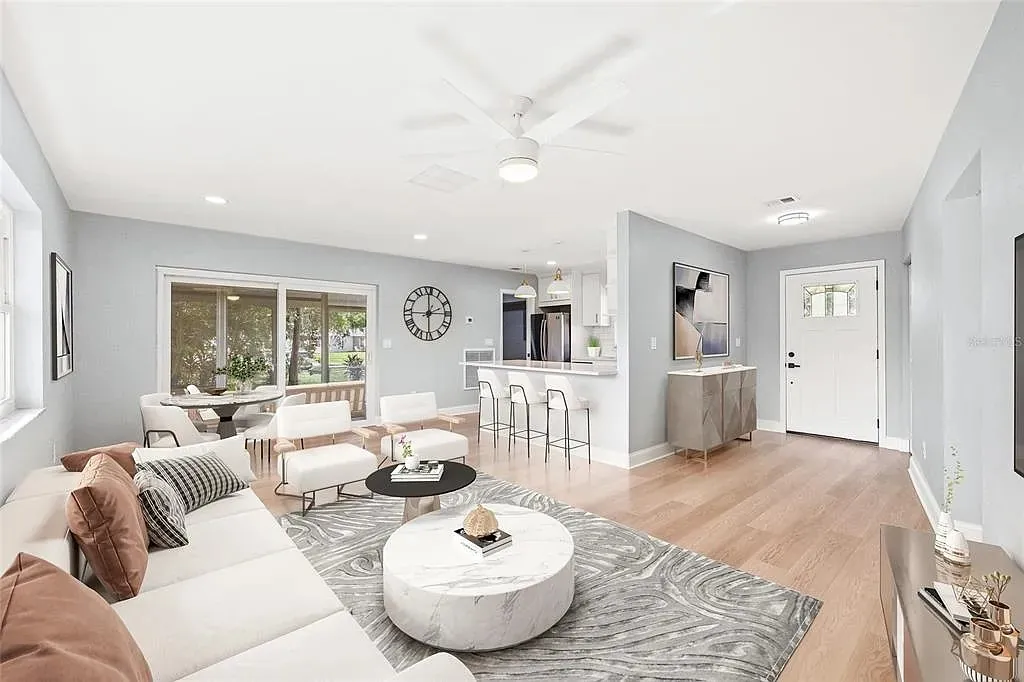
Open-concept floor plans are the dominant residential design in Florida — and for good reason. They maximize natural light, encourage connection between kitchen, living, and dining areas, and suit the indoor-outdoor lifestyle that makes Florida living so appealing. But open-concept layouts create specific flooring challenges that a smaller, room-by-room floor plan doesn't.
When one floor flows through multiple functional areas without the definition of walls, the flooring itself becomes an important design element — not just a background surface. Here's how to use flooring intentionally to make your open-concept space feel cohesive, spacious, and well-designed.
The Case for Continuous Flooring
The single most effective thing you can do for an open-concept space is run the same flooring material continuously throughout the entire area. One floor, no transitions, flowing uninterrupted from the kitchen through the dining area and into the living space.
This approach works because the eye reads the continuous surface as a single unified space, making the room feel larger and more intentional. Transitions — where one flooring material meets another with a threshold strip — create visual breaks that fragment the space and make it feel smaller and more disjointed.
LVP is particularly well-suited to this approach in Florida. It's highly water-resistant (so it works well in kitchens and dining areas where spills are inevitable), durable across all traffic levels, comfortable underfoot, and available in formats wide enough to cover large continuous areas without seams.
"The most transformative flooring decisions we make are often the simplest: one material, run continuously through an entire level of the home. The impact on how spacious and cohesive the space feels is dramatic."
Direction Matters More Than You Think
In an open-concept space, the direction your planks run has a significant effect on how the room feels:
- Running planks lengthwise (toward the back wall from the entry) draws the eye into the space and makes the room feel deeper.
- Running planks parallel to the longest wall emphasizes the room's length and creates a sense of expansiveness.
- Running planks toward natural light sources (windows, sliding doors) creates a natural visual flow toward the brightest part of the room.
- Diagonal installation is a bold choice that creates energy and movement — best in very large spaces where the diagonal doesn't create awkward cuts at too many walls.
For most Florida open-concept homes with a standard rectangular floor plan, we recommend running planks parallel to the longest dimension of the space, running toward the primary light source (often sliding glass doors to a lanai or pool area).
When Different Flooring in Different Zones Works
While continuous flooring is generally the best approach for open-concept spaces, there are situations where different flooring in different zones is appropriate or even desirable:
Kitchen as a defined zone
In some layouts, using tile in the kitchen area while LVP or hardwood continues in the living and dining zones creates a natural, functional boundary. This works when the kitchen has a clear visual separation (an island, a change in ceiling height, or a distinct footprint) from the living areas.
Bedroom or office transitions
If a bedroom or home office opens directly off the main living area, using carpet in those spaces creates a functional distinction — quieter, softer, more private — while the hard surface continues in the common areas. This intentional material change reads as designed rather than inconsistent.
Area rugs as zone definers
In a fully open plan with continuous flooring, area rugs are the design tool for defining zones without changing the floor. A rug under the dining table, another under the living room seating group — the flooring continues, but the zones are visually anchored and distinguished.
Choosing the Right Color for Open-Plan Florida Homes
Florida's abundant natural light means your flooring will be seen under intense, warm light most of the day. A few considerations specific to our climate and lifestyle:
- Warm, natural tones (blonde oak, honey, warm walnut) read beautifully in Florida light and complement the coastal/transitional design styles common in Tampa Bay homes.
- Very dark floors show footprints and dust more readily in Florida's sandy environment and can feel heavy in bright open spaces — consider medium tones instead.
- Very light floors create an airy, beachy feel that suits Florida's atmosphere beautifully, but show tracked-in sand and dirt more readily at entry points.
- Medium warm tones — our most popular category — strike the best balance between showing the character of the material, looking natural in Florida light, and being practical in daily use.
Free Consultation at Our Holiday, FL Showroom
Bring your floor plan and we'll help you choose a flooring direction, material, and color that unifies your space beautifully.
Schedule a Free Consultation